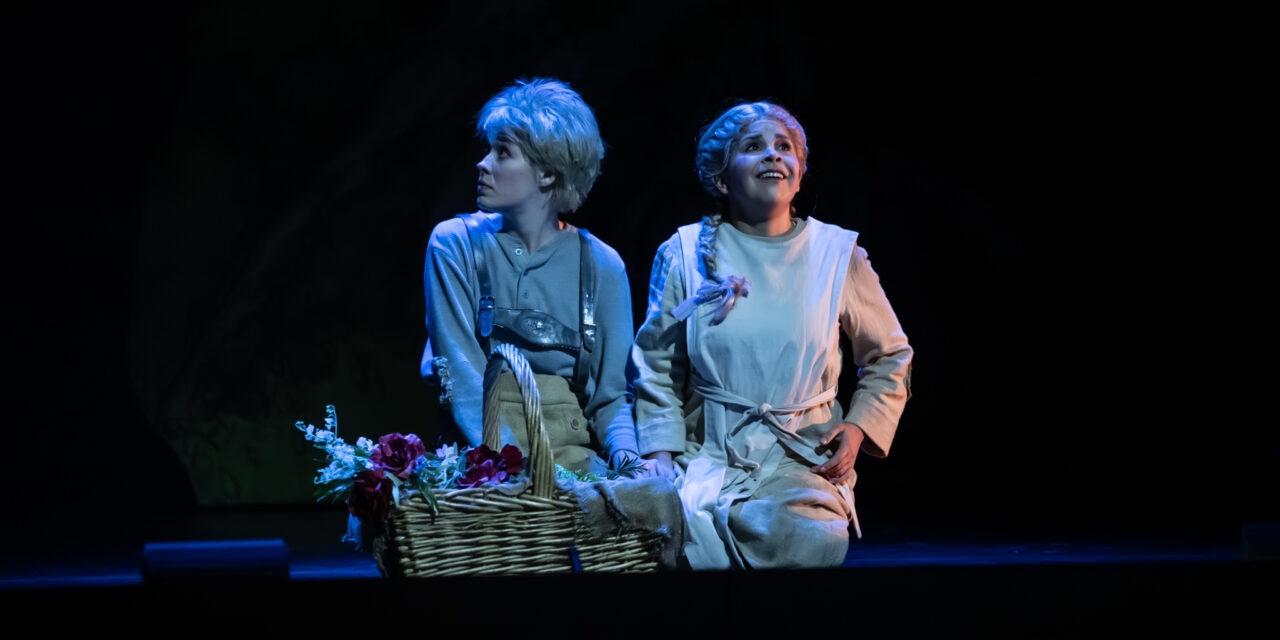
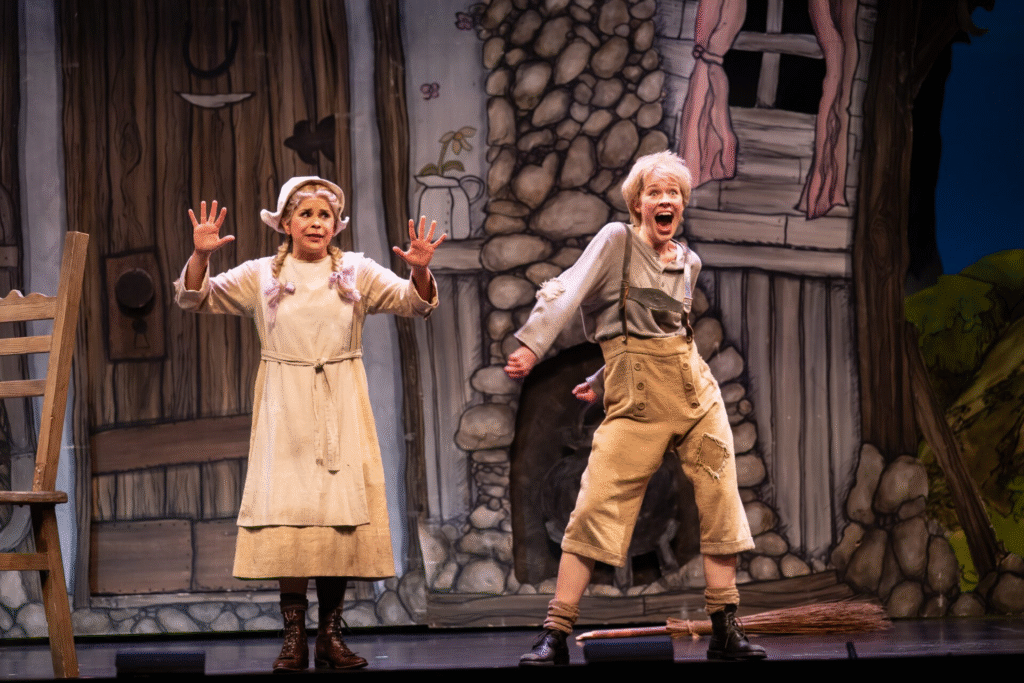
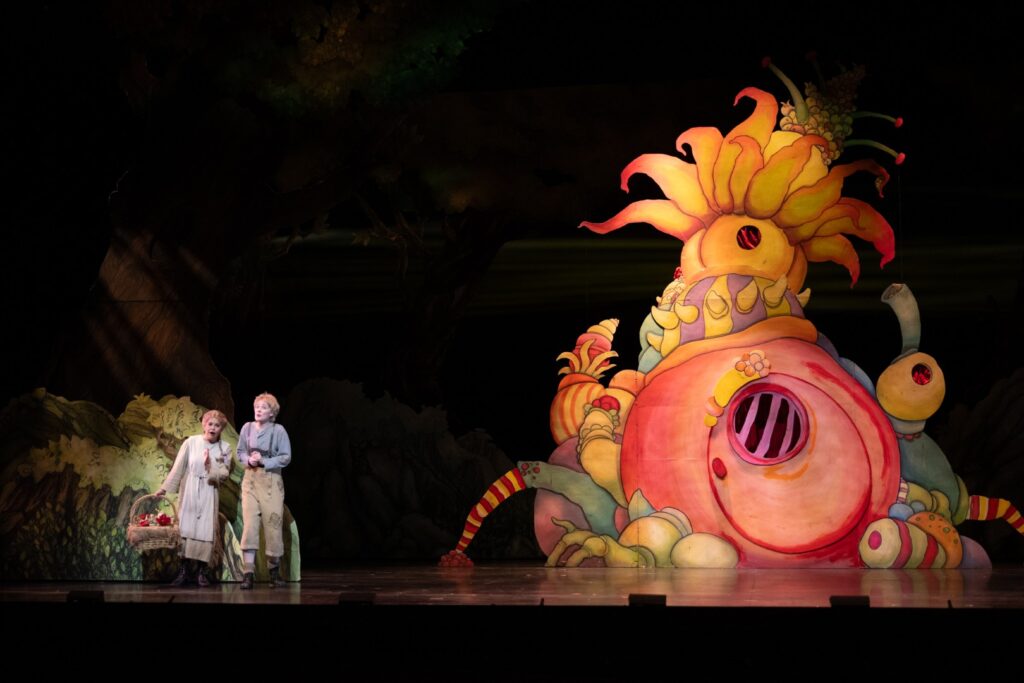
Xenia Puskarz Thomas as Hansel and Simone Osborne as Gretel (photo: Benjamin Laird)
An enchanting production for the age of helicopter mums
review by Mark Morris
Calgary Opera
Engelbert Humperdinck (1854-1921) Hansel and Gretel
Hansel: Xenia Puskarz Thomas
Gretel: Simone Osborne
Witch and Gertrude (the Mother): Claire Barnett-Jones
Peter (the Father): Peter Barrett
Sandman/Sleep Fairy: Maria Milenic
Dewman, the Dew Fairy: Katelyn Bird
Puppeteer: Pete Balkwill
Puppeteer: Ali DeRegt
Director : Brenna Corner
Set, Costumes, and Puppet Design : Old Trout Puppet Workshop
Lighting: David Fraser
Calgary Philharmonic Orchestra
Cantaré Children’s Choir (Artistic Director, Catherine Glaser:Climie)
Conducted by Jonathan Brandani
Southern Alberta Jubilee
February 6, 2026
If there ever was a one work composer, it must be Engelbert Humperdinck. He is celebrated for a single opera, Hänsel und Gretel (Hansel and Gretel), and most classical music lovers would be hard pressed to name another work by him. Indeed, in the English-speaking world, the name Engelbert Humperdinck conjures up the British pop singer, beloved of Las Vegas (he’s appearing there once again in April, at the age of 89), who pinched the German composer’s name at the suggestion of his manager in 1965.
But what an opera Hansel and Gretel is! Within a year of its premiere two days before Christmas Day, 1893 (conducted by no less than Richard Strauss) it had been seen in 74 different opera houses, and has been a staple ever since – in 2024 it was the 9th most performed opera world-wide. Its origins were in four songs written for a puppet show his nieces were putting on. His sister Adelheid Wette suggested turning it into an opera, and herself wrote the libretto, based on the famous Brothers Grimm fairy-tale.
It has usually been described as ‘Wagnerian’, partly because Humperdinck was a disciple of the German master (he assisted Wagner in the premiere of Parsifal, and did the four-hand reduction of the opera). But although there are Wagnerian elements in the orchestration and in such moments as the mist coming into the wood, it really belongs to a different Central European tradition, of Dvořák, Erkel (for example, after the Witch has been pushed in the oven), and especially Lortzing – all composers whose operas are now little known in North America. Themes do reappear, but not in a Wagnerian leit-motif manner, and above all it is a ‘numbers’ opera, rather than a continuous flow in the Wagnerian style (Humperdinck did later produce a much more Wagnerian through-composed fairy-tale opera, Königskinder (King’s Children), which is still heard in Germany – there are two productions this year). Above all, it is a wonderfully melodic opera in a very un-Wagnerian way, with tunes that, once heard, are unforgettable.
Hansel and Gretel is also a work that is open to a considerable range of interpretations. In modern productions, drawing on fairy-tale analysis, one of the questions is whether to have separate singers for the Witch and the Mother (Wette follows the 1812 Grimms tale, where she is a mother, rather than the change to step-mother in the 1840 edition), or one performer for both roles. The reasoning behind this (apart from the financial advantage of just one singer) reflects the psychological implications of such fairy tales as Hansel and Gretel, which so often tell important life messages. The Grimms story is, subliminally, a classic coming of age tale. Here there are two protagonists who need to make the transition from child dependent on the mother to independent autonomous quasi-adults. They, like young teenagers, resent the control of the mother at the start. At the same time, the mother has to let them go – if they fail to make that transition, their independent selves will be swallowed up by her. In other words, she will have become the wicked witch who gobbles them up. At the same time, it is a classic hero’s journey story, in the Joseph Campbell mould. Our two heroes leave home – the conscious – with a personal task to achieve. This has to be done in the subconscious, symbolized by the journey into the wood. There they face their task to move from child to young adult (the task is killing the witch), and then they return from the unconscious to the conscious. Their success is represented by change at home, which in the Grimms is symbolized by the disappearance of the mother (she has died in the interim).
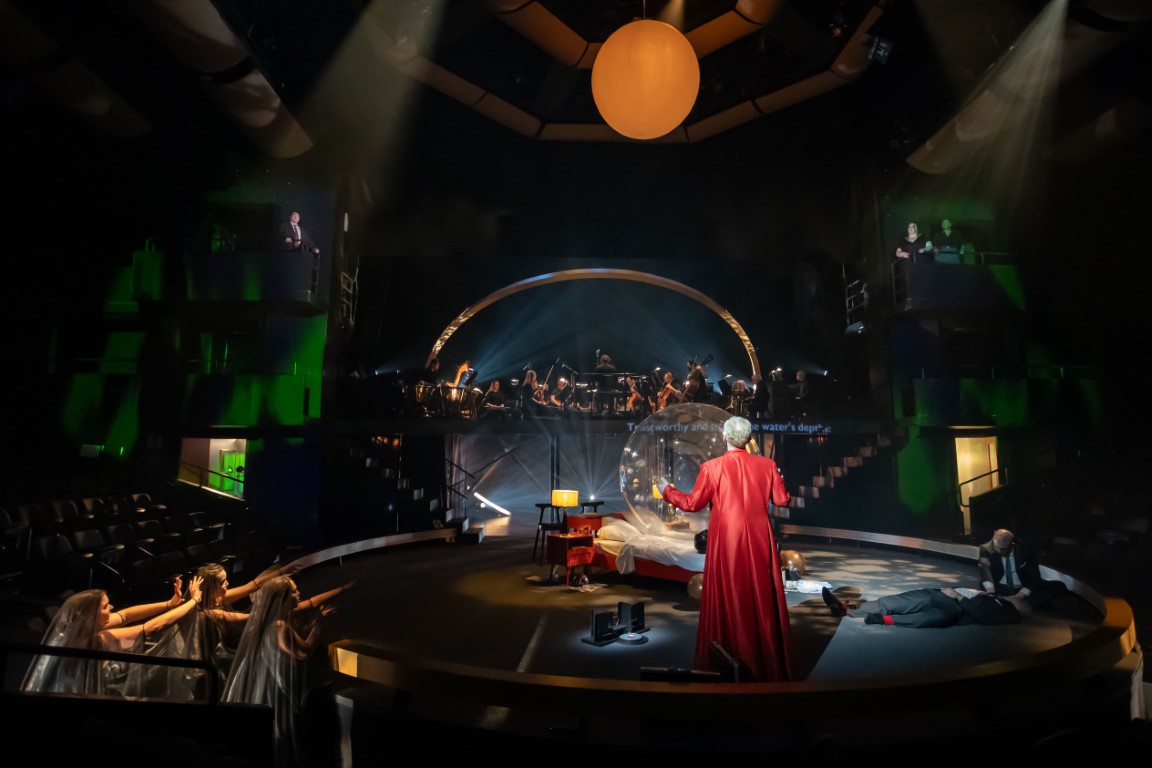
Calgary Opera rather sidestepped the mother/witch issue by having the same singer, British mezzo-soprano Claire Barnett-Jones, play both the mother and the witch, but in a staging that made no connection between the two. For as the Witch, she was the front half of a pantomime four legged construct surmounted by a huge glowering witch’s head, and at least one audience member I heard at the end had not realized it was the same singer. Indeed, although the uncredited program note mentions Jung, this production avoided any psychological exploration, and instead concentrated entirely on the enchanting and the enchanted, and succeeded beautifully in both.
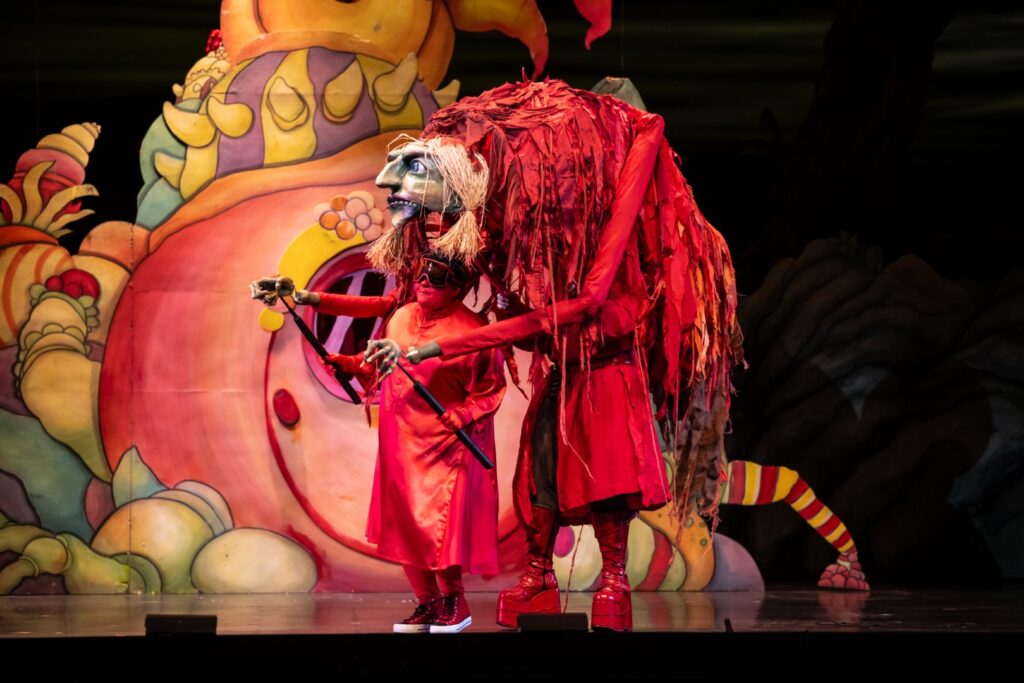
The production originated at Vancouver Opera in 2016, where it was conducted by the young Alexander Prior, a year before he started his tenure as Chief Conductor of the Edmonton Symphony Orchestra. It was then seen in a number of American cities, before being bought by Kentucky Opera, from whom Calgary rented the set, costumes, and concept. The original Vancouver stage director, Brenna Corner, returned to direct this revival. Central to the concept is the use of a very particular kind of rod puppetry, where the puppet is hoisted high on a stick and manipulated by rods from below, supplemented by a couple of life-size fantastical puppet characters. These, and the sets, were designed by the Old Trout Puppet Workshop, which originated in southern Alberta, and are now based in Calgary.
The house at the beginning was pretty straightforward, but the enchantment began when Hansel and Gretel left, with a very slick scene change (the entire production was commendably seamless). Here was a forest that had echoes of Maurice Sendack’s Where the Wild Things Are, right down to the magical creatures, some of whom appeared on those long rods high in the trees. Chief among these was a splendid red cuckoo, first cousin to the Jubjub Bird in Charles Santore’s Jabberwocky illustrations.
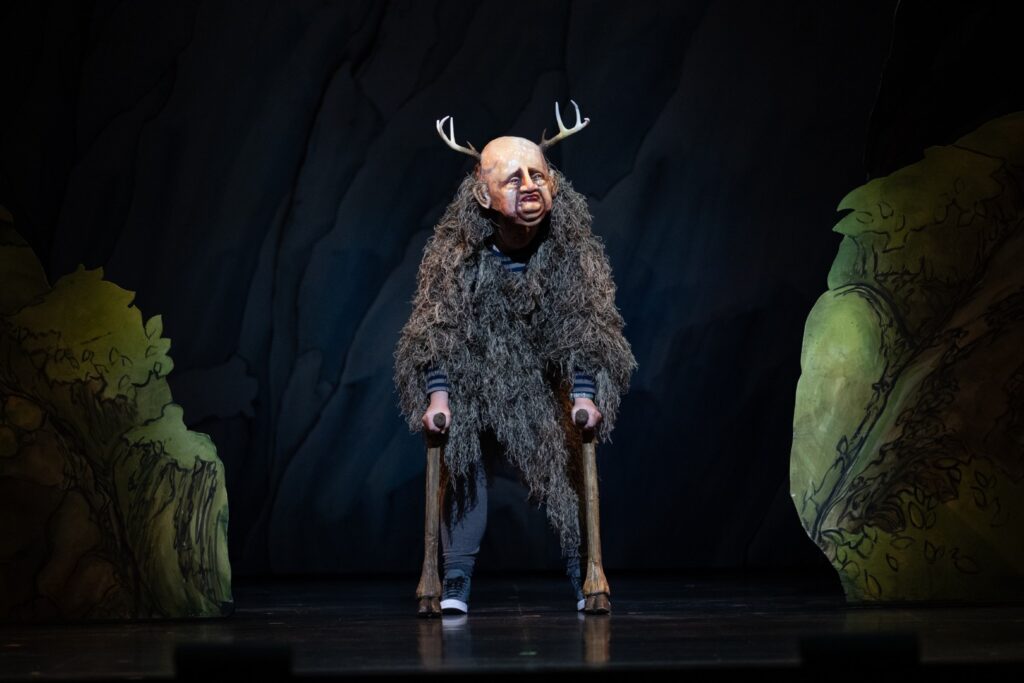
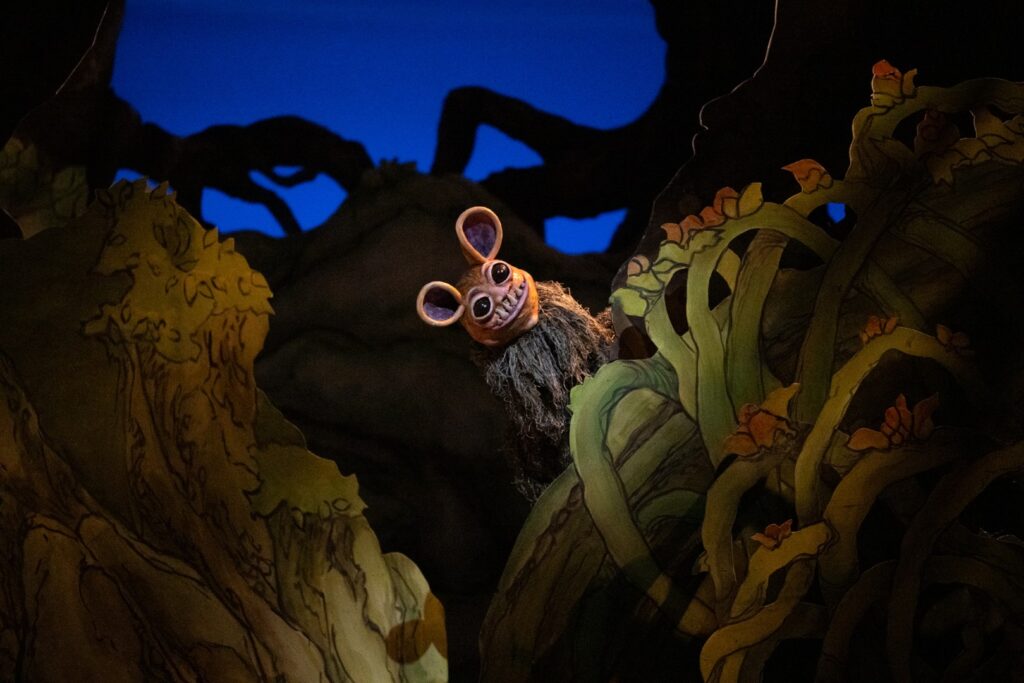
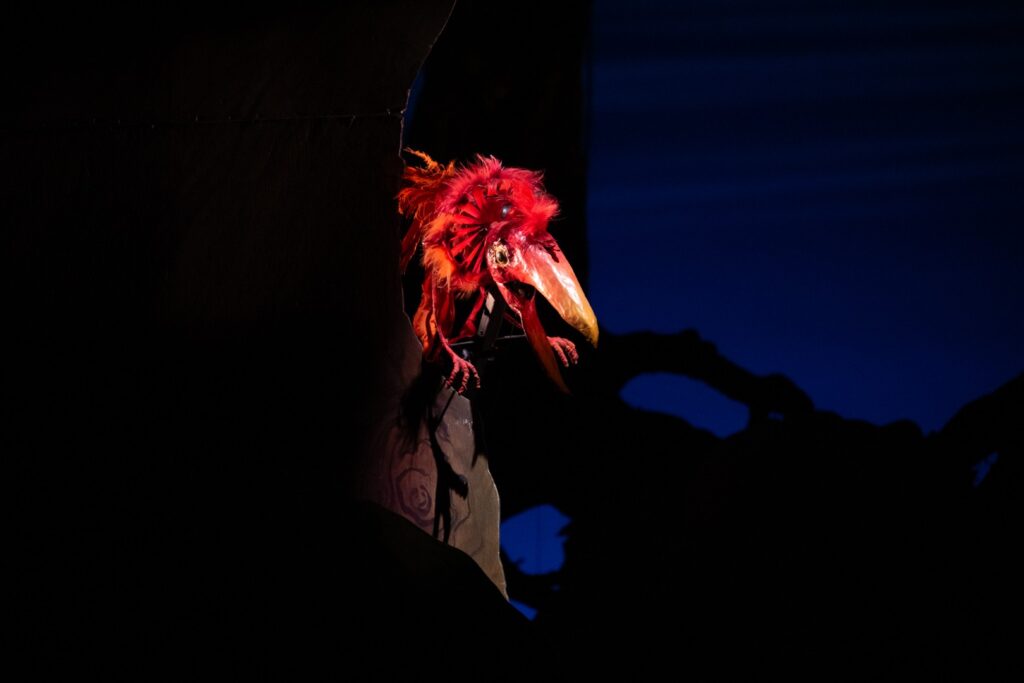
This enchantment continued in the dancing fireflies and will-o’-the-wisps, themselves on long rods, manipulated by the highly disciplined children and young adults of the Cantaré Children’s Choir, who, after the move to the forest, were almost continually involved in the action in one way or the other, from puppeteering the angels (looking rather like ghosts on their own rods) to being the gingerbread children.
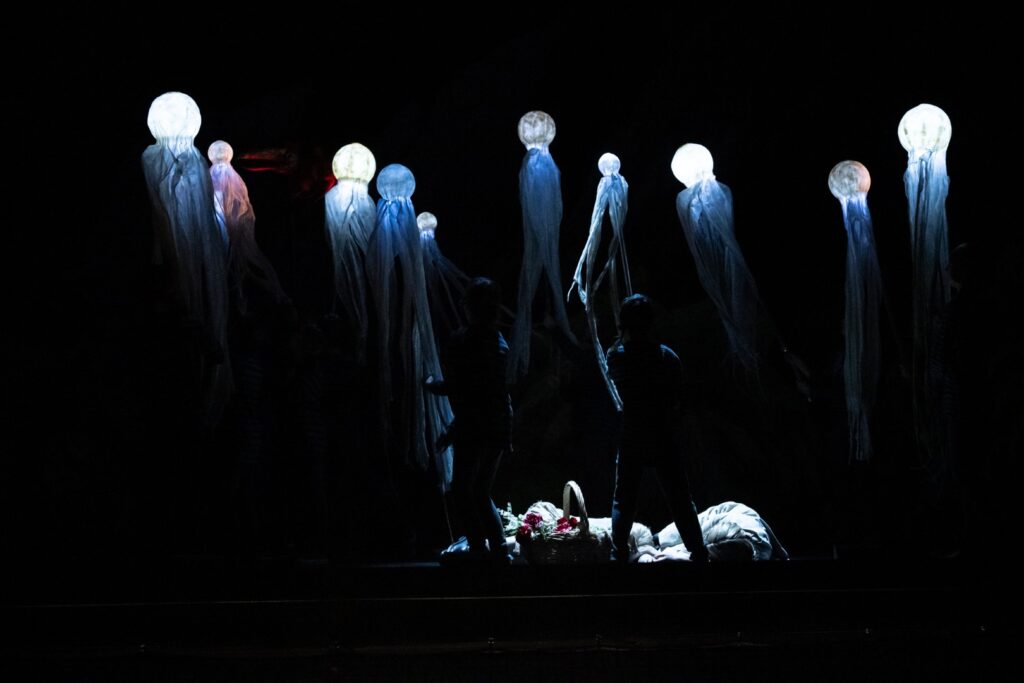
These elements could have easily led to an exploration of the darker sides of the opera, which, although more muted than those in the Grimms original, are nonetheless definitely there in the music (and the story). However, this production clearly decided not to do that. Barnett-Jones was a much more sympathetic mother than usual at the beginning, the chiding of the children more an expression of habitual complaint than a threat. The children – excellently played and sung by Simone Osborne as a Gretel who will definitely end up like her mum, a little bossy and complaining, and the very lively Australian mezzo Xenia Puskarz Thomas making her Canadian debut as Hansel, who took on the role at short notice – were more on the anxious end of the fear scale than the terrified.
That this was production eschewing the darker, or indeed the more spiritual, was reinforced by the Dew Fairy section, whose staging went for gentle laughs from the audience, and confirmed by the move to the Witch’s house. This was an amazing concoction of multi-colours and shapes and protuberances, like a Daliesque version of a sea reef coral creature. There was little in the whole of this last act to send any shivers up the spine – indeed, overall there was more a sense of fantasy and fun, and even Barnett-Jones’ witch was more farcical than frightening, though she added a little edge to her voice that was most effective.
All of this was, one felt, designed to delight children, and to avoid frightening them, and there were lots of children in the audience – indeed the almost-full house seem to go evenly right across the age ranges, from 6 to 80, which was good to see. This is a perfectly valid way to present the opera, however much one might miss the darker side. But it did make me think it was a production for the age of helicopter mums, keeping their children away from anything that might possibly harm them, from germs to playing in the back alley. Not for them the Wicked Witch of the West.
That said, it was a truly delightful evening, with good supporting contributions from Maria Milenic as the Sandman and Katelyn Bird as the Dew Fairy (both with Calgary Opera’s McPhee Artist Development Program), and Canadian baritone Peter Barrett as the Father. The Calgary Philharmonic were in particularly sonorous form, and conductor Jonathan Brandani paced the opera very effectively.
The only niggle was the uncredited translation – or adaptation – into English. Presumably it was the one by the director, Brenna Corner, used in the original Vancouver production. Unfortunately, it was inconsistent in its tone (would Gretel ever use the word ‘chap’?), often clumsy, especially in the relationship to the sung music, and very oddly including Hansel referencing “breadcrumbs”, though they don’t exist in the opera and the word doesn’t exist in the original German libretto. It was a pity, as since there are much better translations available, and anyway it is time there was a really good modern English singing version.
But it did not spoil the delights of this operatic evening, with its introduction of two younger overseas singers worth watching out for, Claire Barnett-Jones and Xenia Puskarz Thomas, its fine home-grown talent, its enthusiastic and musical children’s choir, and the captivating fantasy of its staging.
Next up for the company is The Barber of Seville on April 18, 19, and 24. Calgary Opera have also announced their 2026/2027 season, featuring Tosca, Massenet’s Cinderella, and an Otello with the Argentinia-Spanish tenor Marcello Puente in the title role.
Calgary Opera website