Review by Mark Morris
Photos by Nanc Price for Edmonton Opera
Conductor: Gordon Gerrard
Director: Anna Theodosakis
Scenic & Property Designer: Scott Reid
Costume Designer: Heather Moore
Lighting Designer: Siobhán Sleath
Figaro: Korin Thomas-Smith
Rosina: Tessa Fackelmann
Count Almaviva: John Tessier
Dr. Bartolo: Doug MacNaughton
Don Basilio: Vartan Gabrielian
Berta: Keely McPeek
Fiorello: Connor Hoppenbrouwers
Edmonton Symphony Orchestra
Edmonton Opera Chorus (Chorus Director Shannon Heibert)
Conducted by Gordon Gerrard
Jubilee North, Edmonton
Saturday, November 7 2026
After a problematic couple of years that included the cancellation of its only full-scale production in the Jubilee in its 2025/2026 season, Edmonton Opera is finally back where it belongs, complete with the Edmonton Symphony Orchestra in the pit. A triumphant home-coming it was, too, with two sold-out performances of Rossini’s much loved The Barber of Seville, and a wildly enthusiastic audience on the night I saw it (Saturday November 7). It was perhaps significant that a stranger sitting in front of me was a first-time opera goer, and the couple beside me long-term opera goers who had abandoned Edmonton Opera in those last two years – that is the combination of demographics the company needs.
Directors have a choice to make when faced with Rossini’s best loved opera: whether to play it for its considerable theatrical qualities, or empathize the bel canto musical brilliance – it is actually very difficult to combine the two in a successful mean. Understandably, given its return to the Jubilee and the need to woo back its audiences, Edmonton Opera went for the former, and anyway the current company has foregrounded theatrical qualities in its work. Fortunately, it did not ignore musical virtues nearly as much as EO’s last Barber of Seville production in 2014, which reset the opera in 1940s Seville (review here), and this new production was fast paced and consistently entertaining.
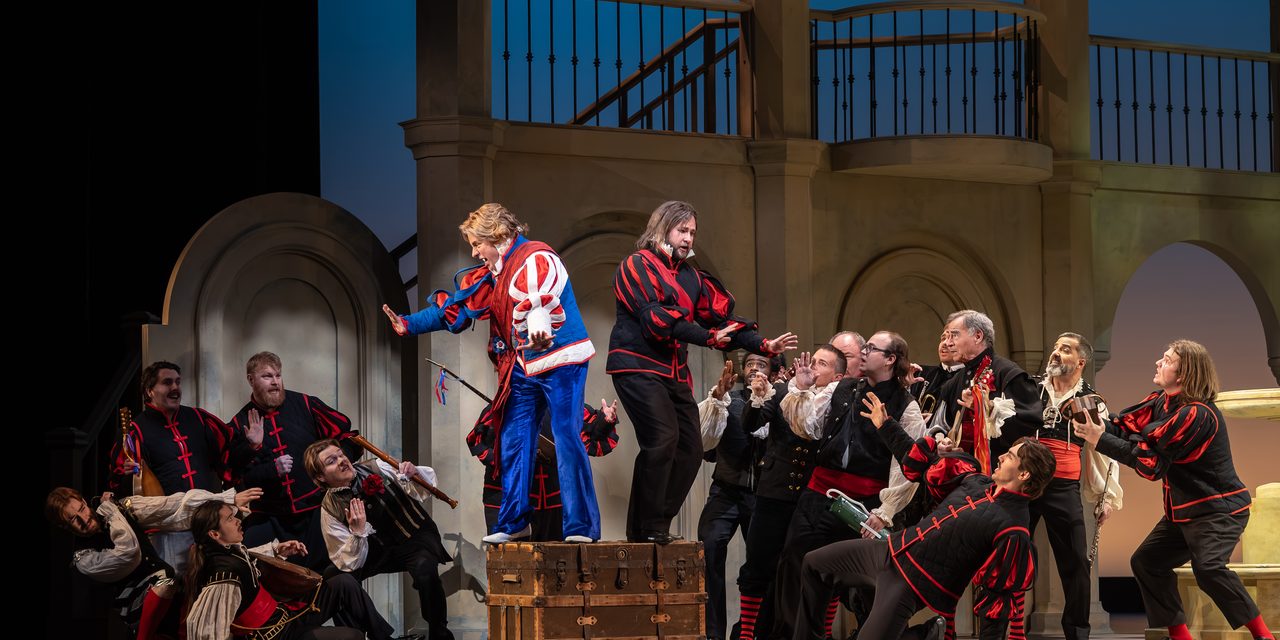
Its core had come from Calgary Opera, who presented the opera in April (which I did not see), in the form of the costumes by Heather Moore and sets by Scott Reid, which travelled north for this version. The overall theme was gently fantastical, as if it were some kind of toy world. Indeed, much of the inspiration seemed to be from Barbie the movie, with the same kind of swift lighting changes, and fantastical semi-Hollywood characters appearing in the (all male) choral scenes – the effect was epitomized by the unadorned all white piano prop in the music room. The costumes, once one had got used to this mise-en-scène, were simply wonderful, full of fantastical frills and sparkles and blues and greens and pinks, but each based on an underlying normality, as if they had been created on an acid trip. My favourite was perhaps Rosina’s in Act II, evoking a Spanish gipsy dancer, everything splendidly exaggerated.
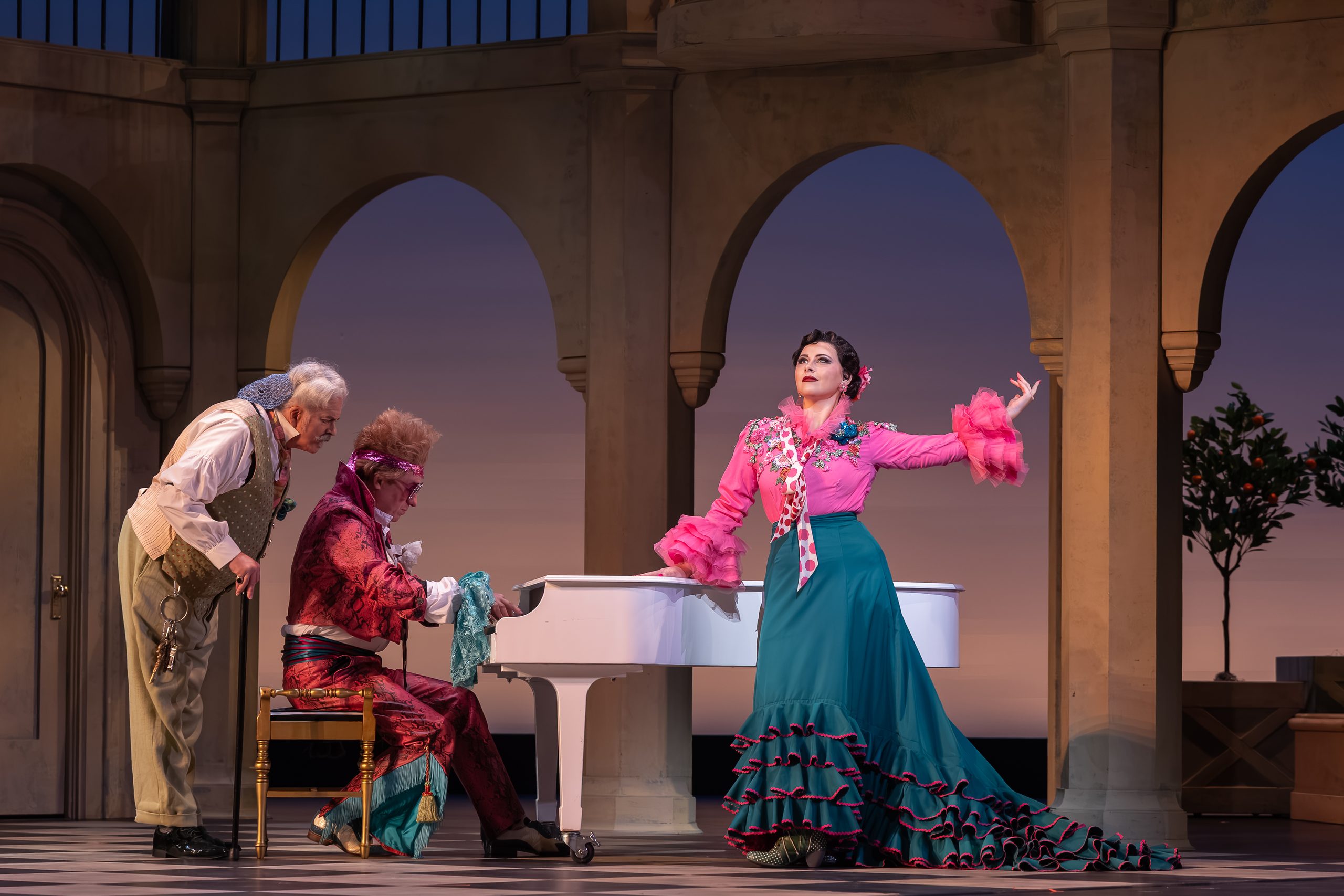
Director Anna Theodosakis is also a choreographer, and it showed in the inventive and detailed and often very funny movement and blocking. It felt as if the shadow of stage director Rob Herriot, who sadly died earlier this year, and who influenced so many Canadian opera singers and directors, lay behind the proceedings – there was the same attention to comic detail, the surety of movement, especially when a number of people were involved, a similar stylization. There was hardly a false step in it, although the clash between theatrical and musical values did raise its head when major arias were punctuated by audience laughter at some unconnected shenanigans on stage.
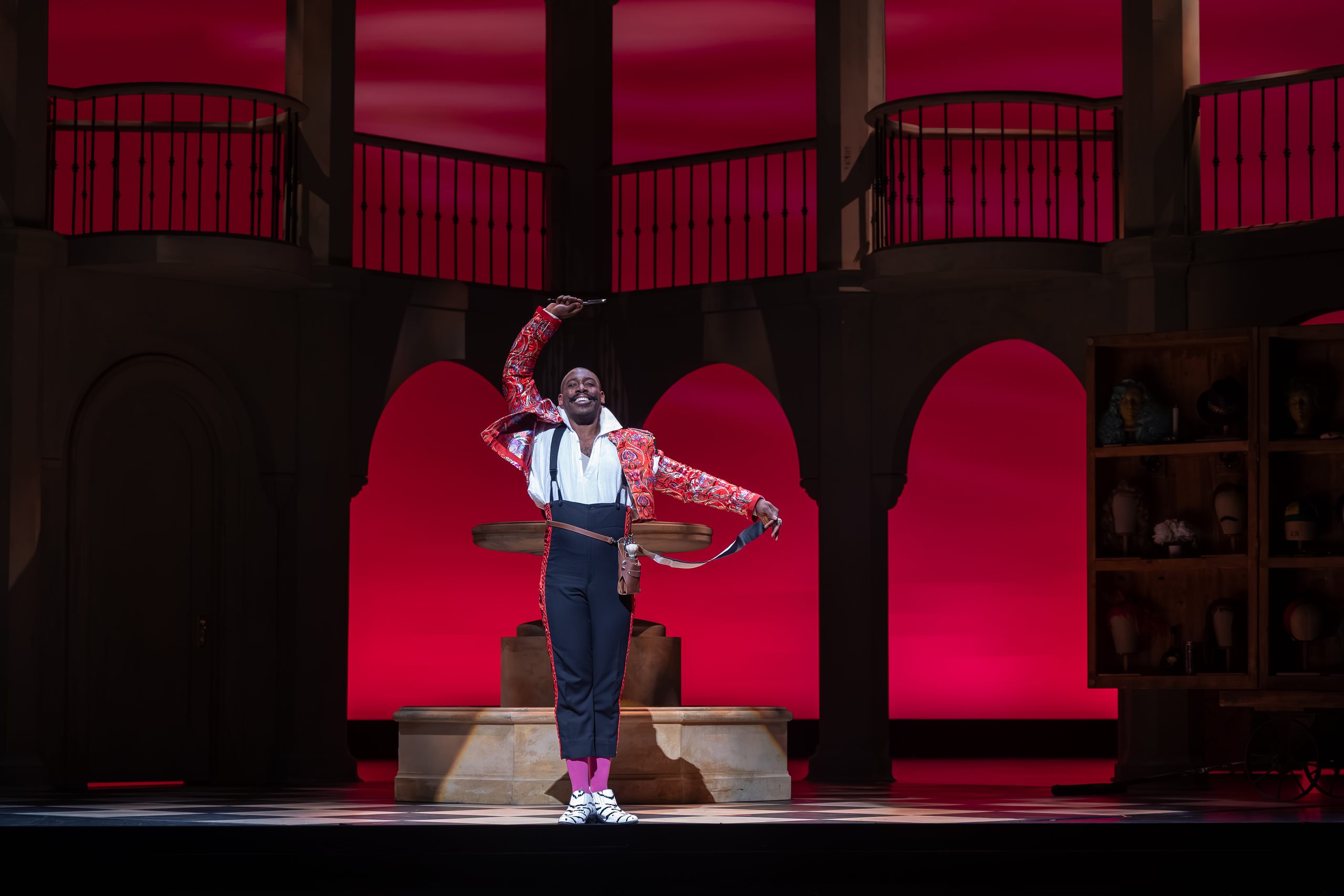
The cast were exclusively Canadian singers, as is Edmonton Opera’s current practice. Three of them had won prizes in Edmonton Opera’s Rumbold Prize, while a further two are current or past emerging artists with the company. That overall youth added to the zest of the proceedings, and outstanding was Korin Thomas-Smith, the 2025 Rumbolt winner, as Figaro. His presence on stage was commanding from his very first aria, his acting thoroughly convincing, and his baritone rich, quite dark in colour, flexible and authoritative. The Rosina, mezzo-soprano Tessa Fackelmann, who won the 2024 Rumbold, settled after a slightly unsure start, and theatrically provided the foil to her father and to her lover. Fine though the voice is, it is not really a bel canto one, at least on this evidence, and it would be good to hear her in different repertoire. She is singing the Composer in Strauss’ Ariadne aux Naxos with Sarasota Opera later this year, and that might be ideal. Another resonant voice was the bass of Vartan Gabrelian as Don Basilo – he won second place in the inaugural 2022 Rumbold Prize. A mention, too, of Keely McPeek, who took part in the workshops of the new opera Indians On Vacation, based on the Thomas King novel, which Edmonton Opera cancelled earlier this year. She made the most of Berta’s rather isolated sole aria (‘Il vecchotto cerca moglie’), if not quite appearing to be the old woman of the household.
The older singers were much better known than this new generation. Doug MacNaughton has been singing, acting, and song writing since 1982, and his Dr. Bartolo was the most obviously theatrical of the leads, solid, but not really matching the vocal prowess of his compatriots. Tenor John Tessier needs little introduction. He had played Count Almaviva in the Calgary production, and started this performance the same role rather uncharacteristically hesitantly – so much so that I wondered whether he was going to play the Count as a more aging roué. Instead he quickly emerged as more of a glamorous glittering 1990s rock star, in command of the role, if leaving one at the end still not quite sure how genuine his romance was.
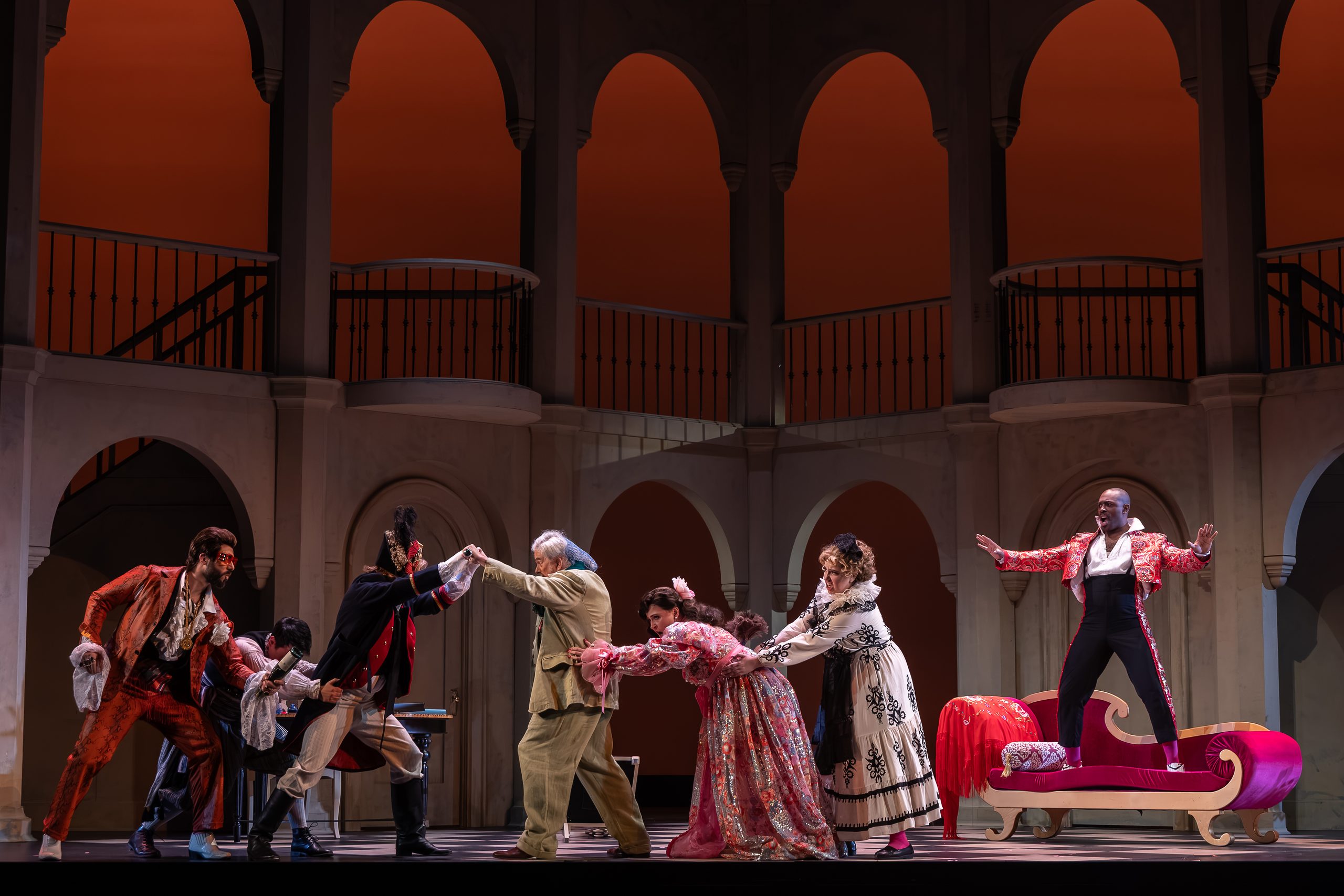
Gordon Gerrard’s conducting was efficient rather than idiomatic, best in the more serious moments of the opera, and the Edmonton Symphony followed suit, not as flexible or as musically involved as the Calgary Philharmonic had been for Calgary Opera’s Tosca a couple of weeks earlier. But that wasn’t really the point, as both conductor and orchestra effectively supported the stage action. And the entertainment qualities of the proceedings were what counted, even if at the end I did wonder what it was all for. When it comes down to it, the story is pretty flimsy, after all.
The answer is that a production like this is about fun, and Edmonton Opera had that in spades. Welcome back.
Edmonton Opera’s next production is Mozart’s The Magic Flute, February 4 and February 6, 2027
web page